Bellota Agrisolutions case lessons
Global leader in the manufacturing of agricultural components and tools
Introduction
Companies that succeed in the shadows, known as ‘Hidden Champions’ [i] or “International Niche Market Leaders” (hereinafter, INMLs), are gaining increasing attention. [ii] They are companies that provide goods which remain hidden from the general public, as they manufacture intermediate products, components, machinery, devices, and software that serve as inputs for the manufacture of end products by third parties. They operate in highly internationalised Business-to-Business (B2B) markets (industrial markets involving transactions between companies, with limited visibility within society), often capturing significant market shares. [iii]
While Spain possesses several INMLs, the phenomenon has been poorly documented domestically. [iv] Since most of the research on the subject has focused on the central-northern area, the majority of the cases known so far come from the Basque Country. [vi]
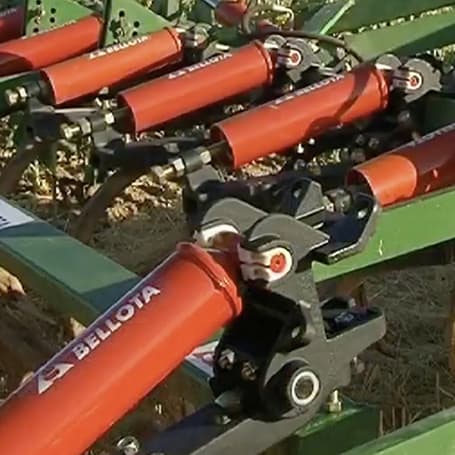
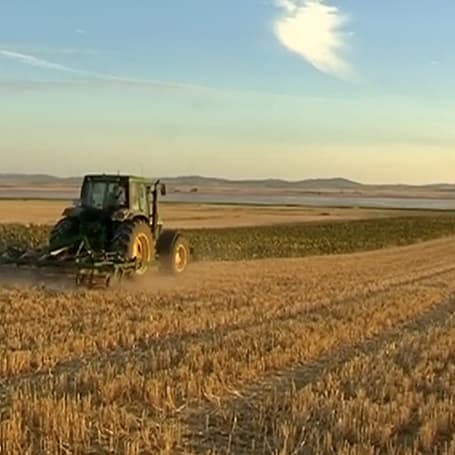
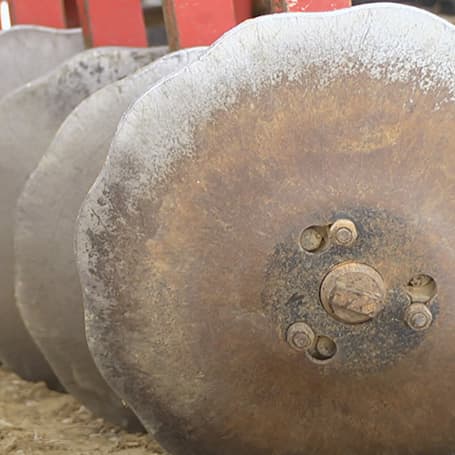
Bellota Agrisolutions, based in Legazpi (Gipuzkoa), is a practical example of an INML. A manufacturer of disc ploughs and disc harrows, as well as other soil preparation and sowing components, which are sold to both agricultural machinery manufacturers (e.g. John Deere, Case New Holland, Agco), and to distributors of agricultural components. Their speciality lies in manufacturing specially heat-treated steel components that facilitate the cultivation of agricultural soil — for instance, a disc plough that achieves maximum durability by balancing hardness and strength. Bellota Agrisolutions’ Legazpi plant has a turnover of around 80 million euros a year, of which more than 90% comes from foreign sales. In addition to its headquarters in Gipuzkoa, it has production plants in America and Asia, as well as in several European countries. It has a presence in markets in more than 80 countries, with a turnover of more than 200 million euros per year. It has been ranked as the number one company worldwide in direct supply to agricultural machinery manufacturers (considered to be the most demanding customers and the top market segment), with an estimated global market share of 33%.
Bellota Agrisolutions shares the following features with other INMLs:

Its flagship product is among the Top 3 best-selling worldwide or No. 1 in its home continent in terms of market share.

It obtains at least 50% of its turnover from international trade.

It markets its flagship product on at least three continents.
If the company is among the Top 3 worldwide, it must market its flagship product on at least three continents. If it operates exclusively in its home continent, it will be required to have the largest market share for that product in that geographic area.
Despite the growing interest in these types of businesses, there is a dearth of case studies that categorise and characterise INMLs, and reveal the modus operandi behind their success. The matrix below shows how different types of INMLs can be identified. Drawing on the case of Bellota Agrisolutions, we will then illustrate how INMLs can dominate their market niches.
Categorisation of INMLs
The following matrix can be used to explain the types of international niche market leaders that exist. It shows what kind of product or service an INML can offer, and how it remains hidden from the general public:

Four specific categories can be identified:
Silent components
The INML acts as a supplier of a component, system or technology that is embedded in an end product
(Intel Inside – type).
For example: Copreci (safety components for household appliances)
Invisible industrial suppliers
The INML manufactures an end product, but this is used at the site of an industrial, and is thus invisible to the general public.
For example: Etxe-Tar (manufacturer of machines for the production of automotive engine components)
Functional systems specialists
The INML may supply a component to the integrator of an installation, and while the part provided remains visible, the final installation operates out of sight of the general public.
For example: Bellota Agrisolutions (disc ploughs and disc harrows)
Actors in remote infrastructures
Finally, the INML may be the manufacturer, integrator or operator of an outdoor installation, which itself is visible, but its location is either not accessible or not open to the public.
Examples of this are onshore or offshore wind farms, or solar panel fields (created by companies such as Sener)
How do INMLs dominate the niches they lead, and how do they sustain their leadership?
The pathway to niche leadership typically commences with an initial target niche positioning phase. This is followed by a consolidation phase, in which the INML defends or maintains its leadership in the established niche.
The first phase involves identifying a specific market (niche), aiming to meet the needs of a group of customers who are currently either not being served or being underserved. Meeting these needs is the leitmotiv of INMLs.
Many INMLs undergo a process that involves clarifying ‘what business are we in?’ [vi] and ‘who is our target audience’. Many of them start without a clear understanding of their main market niche and therefore spend considerable time serving multiple audiences and markets before identifying their true target.
Bellota Agrisolutions currently has a clear understanding of its core business and target audience, but this has not always been the case.
Until 2005, Bellota was primarily defined by its industrial strength and operated under a ‘supply-push’ logic. Its competitive advantage lay in its expertise in forging technology, which enabled the firm to offer a wide range of forged metal products for various markets, including agriculture. At this stage, production was not necessarily driven by demand, but by the industrial processes in which the company had the most specialised knowledge.
In 2005, Bellota shifted direction towards a demand-pull approach, allowing market needs to define both its product portfolio and the most suitable manufacturing technologies to meet customer expectations. As part of this process, agricultural machinery manufacturers emerged as one of the key strategic niches. As a result, these Original Equipment Manufacturers (OEMs) became the reference point for the development of a specialist, product offering, driven by constant innovation and adapted to market needs.
Following on from this development, Bellota Agrisolutions was created as an independent company within the Bellota holding. In parallel to this reorganisation, a customer-focused product engineering team was built, which was tasked with developing solutions in close partnership with customers. This team operated separately from the process engineering team, whose focus remained on optimising factory operations.
This new approach also provided a decisive impetus to the internationalisation of the business, establishing a production platform closer to the markets and OEM in order to serve their specific needs in each region more effectively.
As part of this transformation, Bellota launched a communication campaign targeting all OEMs, with the aim of promoting its new positioning and action plan. Since then, the company’s marketing strategy has concentrated on identifying emerging trends and needs within the agricultural sector that Bellota can address, rather than indiscriminately pushing industrial solutions into potential markets.
During the process of specifying the value proposition to be offered, INMLs are often guided, albeit implicitly, by a ‘jobs-to-be-done’ perspective (‘what job do we have to do or what function will be served by our solution?). [vii] This means that Bellota Agrisolutions is not only a manufacturer of metal discs for agricultural purposes, but also a partner for farmers in tilling their soil, increasing their yields and maximising the productive potential of their land. Consequently, the company promises its customers that, by working with Bellota Agrisolutions, their work will be more accurate and consistent, avoiding idle time and enabling them to achieve greater profitability. To deliver on this promise, Bellota Agrisolutions concentrates all its resources on cooperating with OEMs in product design through shared engineering. Its aim is to develop more efficient and innovative solutions in processes and materials, ensuring that the machine the OEM delivers to farmers fulfils their expectations in terms of value. By communicating its value proposition in this way to customers and users, the company shapes its target market beyond the physical characteristics of its base product.
To successfully position itself in a niche market, a company must tailor its offering and its way of engaging with the market by matching the specific preferences of the type of customer it wants to serve. In terms of generic strategy, [viii] this involves making a choice between competing through specialisation, aimingd at differentiation, or pursuing cost leadership. The resulting value propositions that emerge do not meet the needs of all possible customers, they do not provide a one-size-fits-all solution for all audiences. They will work for some specific customers, but not for others. At the same time, by targeting a specific type of customer, it may raise barriers to entry for other companies that specialise in other types of customers or that try to serve all types of customers. Likewise, a positioning strategy focused on a selective audience allows for the development of a stronger connection with the corresponding customers than a company that seeks to serve the general population can achieve.
Consequently, Bellota Agrisolutions does not regard all disc plough users as its target market. Instead, it concentrates on premium agricultural machinery manufacturers (OEMs) and dealers supplying end-users who work the most demanding land. This positioning stems from the fact that Bellota’s design processes and materials deliver their greatest added value in the most demanding environments (such as the hardest soils), when used with the most powerful tractors and in collaboration with OEMs that place the highest demands on their suppliers. In this way, Bellota Agrisolutions concentrates its resources and focuses its attention on OEMs that demand customised products, or products especially designed to meet their specifications. By contrast, the market for disc ploughs for soft soils (where lower quality discs and the standard product have higher market penetration) is of much less interest to the company.
Therefore, faced with the triad ‘competing on cost, specialisation or focus’, Bellota Agrisolutions clearly opts for specialisation and differentiation (focus). This translates, on the one hand, into a ‘narrow product focus’ (focus on a very specific and confined product line or family: disc ploughs), and on the other hand, into ‘deep specialisation’ as well as ‘deep differentiation”’, offering a wide variety of models, many opportunities for customisation and unique after-sales services and warranties.
In line with this customisation, the Bellota Agrisolutions portfolio has the broadest variety of products on the market. In fact, it is the only company that operates in all geographic markets worldwide where agriculture has a strong presence. Moreover, it does so with a very wide range of products, catering to all the needs of the major manufacturers.
Bellota Agrisolutions’s specialisation on disc ploughs is also reflected in its product portfolio, as they occupy a very prominent place within it. Of the 10,000 items the company offers globally, almost half are disc ploughs and disc harrows. Moreover, sales of these discs represent approximately 40% of the total turnover of Bellota Agrisolutions. The concentration of the business on a specific product family is a typical feature of INMLs, [ix] which Bellota Agrisolutions complements with a soft diversification with complementary products, [x] such as tines, cultivators and other components for tiller cultivators, as well as components for sowing and harvesting machines.
In terms of the differentiation of its product offering, the company is increasingly focusing on providing an after-sales service that sets it apart from the rest of the market. Bellota Agrisolutions offers a lifetime guarantee on all its products against any manufacturing defect. This kind of a guarantee, even if the customer never needs to use it, conveys a sense of security and reassurance, making the customer feel they are not spending money on consumables, but rather investing in a product that retains its value over time.
As a general rule, INMLs do not compete on price. In fact, in terms of the initial investment to purchase their products or services, their prices often put INMLs at a competitive disadvantage. This is why they tend to focus on the high or premium segments of the market. However, in terms of ‘total cost of ownership’, their products are often very competitive, as illustrated by the lifetime warranty offered by Bellota Agrisolutions on their discs.
At the same time, when an INML decides to penetrate lower market segments, it typically chooses to create a sub-brand, or to acquire a player with a cost structure that allows it to compete in these kinds of market segments. Bellota Agrisolutions has taken the first approach on several occasions: in specific markets where the Bellota brand holds a strong position, they have introduced products in lower market segments under different brand names, as a defensive strategy to protect and preserve the value of the Bellota name. This positioning has also served to deter competitors seeking to erode Bellota’s position among more price-sensitive customers. For the sake of consistency, the products marketed under lower-cost brands are also of lesser quality than those sold under the Bellota brand. This approach prevents the risk of cannibalisation and safeguards the value of its premium brand.
How do INMLs consolidate their leadership in niche markets?
Once a niche company has positioned itself to its target audience with an offering that aligns with the preferences and needs of that audience, the next step is to consolidate and defend its position. To achieve this, it must apply niche marketing tactics that reinforce the brand and its visibility within the niche, ensure that its brand is the one that first comes to mind for customers in that niche, and develop strong relationships with key players. In this way, the INML achieves greater loyalty on the part of these actors.
Niche marketing [xi] aims to increase visibility and trust in a brand among target customers. Central to this is a branding strategy that promotes a brand’s presence in the channels and places where the target customers move. Branding in a B2B niche is different from branding in a large consumer products (B2C) market. Whereas in B2C markets companies typically operate with large budgets (which are used to invest in advertising, social media campaigns and other forms of conventional marketing), B2B niche marketing places less emphasis on capturing broad attention and more on building and projecting a trustworthy brand image. This involves cultivating public relations with customers and market authorities, for example, by participating in specific events, with the aim of strengthening relationships with market actors and increasing their familiarity with the brand; and, more importantly, with the people behind the brand.
A number of commitments made by Bellota Agrisolutions can be highlighted here:
- Sponsoring specific conferences and seminars in key markets. For example: the ‘strip-till conference’ in the United States.
- Sponsoring newsletters and other reference publications in the sector.
- Organising study days on topics of interest to the sector.
- Holding training and dissemination meetings with stakeholders (e.g. agricultural unions).
- Participating in and sponsoring of client events, conferences, etc.
- Participation in the sector’s leading trade fairs.
- Participation in ‘lighthouse projects’ (projects that bolster the company’s reputation in their market/sector), such as the development of an algorithm that can predict agricultural cycles.
Bellota Agrisolutions has a brand policy and a brand manager who oversees any type of activity related to brand development. The brand constitutes an important intangible asset for the company and is protected by intellectual property rights that Bellota has registered across all the countries in which it operates. The company monitors its brand and products to prevent fraud and counterfeiting and has put in place a traceability and protection system for this purpose.
Customer proximity refers to the physical, operational or organisational proximity to the customer, seeking to ensure convenient access through geographical presence, frequent interactions or constant availability. This concept emphasises faster response times, operational convenience and logistical security, factors that are essential in a business environment increasingly focused on regionalisation and supply chain transparency.
Building this proximity entails various steps, such as establishing direct sales and contacts without intermediaries, building productive capacities in markets where (major) customers are located, and delegating autonomy and powers to branch locations or regional offices that are close to these customers. Geographic proximity not only enhances operational efficiency, but also reinforces customers’ preference for nearby suppliers, thereby strengthening B2B relationships. [xii]
For suppliers, this means that rather than relying exclusively on exports from a single global headquarters, it is crucial to adopt a multi-location approach across different continents. Bellota Agrisolutions has responded to this situation throughout the 21st century by investing strategically, both through newly created subsidiaries and through mergers and acquisitions. At present, its industrial apparatus is fully internationalised, and the company has manufacturing capacity across multiple continents and key markets. In addition, the international business is managed by highly autonomous regional teams with the necessary skills to ensure short response times, effective operational proximity and strong relationships with local customers. In this way, Bellota Agrisolutions is also able to expand the range of products offered, aligning itself with the specific demands of various local markets.
Another growing trend is the preference OEMs have for direct contact with the producers of the inputs they use. These customers value working directly with manufacturers that can guarantee prompt after-sales service and sufficient stock levels. To meet this need, Bellota Agrisolutions has implemented computer systems that integrate the customer’s order planning with the company’s own resources. Direct contact with the end-user has always been a hallmark of INMLs, and current market conditions reinforce this strategy. Having direct access to the end customer, rather than operating through intermediaries, gives customers greater certainty about the availability and quality of materials. In turn, it allows suppliers to keep a close eye on market trends and adapt their value propositions accordingly. At a time when transparency in supply chains is more highly valued than ever, INMLs’ focus on preserving their role as manufacturers gives them a significant competitive advantage.
Customer intimacy is built on developing a thorough understanding of the customer’s needs, preferences, and challenges, fostering trust and long-term relationships. This approach involves close collaboration between supplier and customer to design tailored solutions through co-creation and co-development, ensuring that products and services align with the customer’s strategic objectives.
This collaborative model creates a virtuous circle: as the supplier gains a deeper understanding of the customer’s interests and requirements, the relationship is strengthened and customer loyalty is increased. Customer intimacy also hinders the entry of competitors, creating client lock-in and competitor lock-out. In other words, [xiii] the ability to assess and manage customer intimacy at different organisational levels enables companies to optimise the relationship, maximise their competitive advantage in B2B markets, and raise the barriers to entry for third parties even higher.
Bellota Agrisolutions engages in various types of customer-supplier cooperation that foster intimacy with its customers, strengthen mutual trust and encourage the development of long-term relationships. Key examples include:
- Collaboration with OEMs in the co-design and development of new products and technologies. Working together on innovative solutions allows Bellota Agrisolutions to strengthen the connection with its customers and contribute added value to their value-creation processes. In fact, a significant percentage of the products Bellota develops for OEMs are highly customer-specific. In parallel, Bellota Agrisolutions may restrict the availability of certain technologies, processes and steel alloys to a select group of premium customers, preventing their commercialisation in the general market.
- Take-over of customers’ in-house manufacturing processes. This may include the handing over of machinery and tools previously used by these customers. As such, Bellota Agrisolutions takes responsibility of activities that lay outside its clients’ core business; activities that Bellota can carry out with greater efficiency, while delivering higher quality. This mutual specialisation enables both parties to concentrate on their strengths, creating a synergy in which both sides gain.
- Transparency in pricing practices. Bellota Agrisolutions provides detailed information on the total cost of ownership throughout the life cycle of its products, enabling customers to understand that they are not only receiving quality, but also cost-competitive solutions.
Thanks to this approach, Bellota Agrisolutions has been able to establish multi-year contracts with its clients, consolidating its position as an exclusive single source supplier for several OEMs and distributor companies.
In terms of after-sales services, Bellota Agrisolutions has the widest range of spare parts in the plough disc business, which allows it to keep a constant relationship with users after their first disc purchase. In addition, their discs can be equipped with sensors capable of reading soil conditions. Bellota can use the data generated to advise on the best ploughing practices, or even use algorithms to send instructions directly to the agricultural machinery to automatically adjust its operating parameters in the field. This capability not only increases the value of its products when in use, but also strengthens its value proposition both for agricultural machinery manufacturers (who can offer additional advanced services) and for end-users.
Naturally, the aforementioned co-engineering activities are also part of the service ecosystem that reinforces the link between Bellota Agrisolutions and its customers.
Hidden Champions prioritise long-term continuous innovation over short-term R&D or one-off new feature launches, reinvesting a higher percentage of revenues in R&D than the industry average to maintain a steady stream of innovations. [xiv] Thanks to their close interaction with customers, these companies can nimbly adapt to industry changes, aligning their innovations with market needs to develop customised, high-value products, enabling them to maintain their leadership in constantly evolving environments.
Bellota Agrisolutions complements this approach with a constant flow of technological innovation. Over the past 15 years, the company has introduced several patented solutions that have strengthened its market leadership in the agricultural components niche: a quick-change disc system (2009); inPHInium discs, with remarkably long service life and resistance to breakage (2011); VORTEX discs with curved waves for vertical tillage (2012); VT-REX discs with extremely sharp blades designed to slice the most resistant waste (2017), as well as a new disc support system (2022).
Adopting a broader perspective, the innovative capacity of Bellota Agrisolutions is also reflected in the speed with which it updates its product catalogue. The company manages a catalogue with 10,000 items, and incorporates around 2,000 new products every year to adapt to the latest trends in agricultural machinery. This is evidence of its dynamic capacity for innovation and means that the catalogue is completely updated approximately every four to five years. Similarly, on average, 20 % of its sales come from products developed in the last three years.
Concluding observation
In Germany, foreign trade is more reliant on companies akin to the ‘Hidden Champion’ type than on industrial giants such as Volkswagen or Siemens. [xv] Recent research in the Basque Country reveals similar findings: a fabric of highly specialised, medium-sized industrial companies which operate discreetly in global markets and provide key strategic value are of disproportional importance for Basque export performance. [xvi] Interestingly, this type of company is also highly distributed territorially, a feature that enables them to play a particularly valuable role in countries such as Spain, where demographic and business activity is increasingly concentrated in large urban centres.
Understanding and learning from INMLs’ tactics can help this phenomenon to thrive. This is especially relevant for countries whose economies are dominated by SMEs. That is, when companies operate on lower-volume markets, it is key that they focus on developing precise products for customers with highly specific needs. It is at this intersection that medium-sized niche companies are often best able to compete with—and even beat—larger firms, becoming the customer’s preferred choice. [xvii]
By describing Bellota Agrisolutions journey to niche market leadership, we have outlined the various phases that INMLs may go through on their path from me-too competitor to runaway leader. The figure below shows these phases:

The steps in the figure above certainly do not constitute a path that can be navigated on autopilot; nor do they form part of a decision-making process that may be approached as a one-size-fits-all recipe. However, each of the steps outlined can be very useful for companies that want to build a strong position among a niche audience where specific customer preferences and requirements apply.
Niche entry—and subsequent consolidation—usually starts by identifying a specific opportunity, based on a clear understanding of the existing demands of the potential customer group. This starting point, particularly when detected early, places the INML in an optimal position to build a distinctive value proposition.
The subsequent niche marketing phase should allow the INML to become a top-of-mind choice for the customers in the niche in question. Given that many niche leaders have been pioneers in their respective markets and in meeting the needs of their target audience, maintaining proximity to that audience remain important over time.
Finally, developing intimacy with customers is essential to preserving niche market leadership.
Bart Kamp
June 2025
DISCLAIMER: The views and opinions expressed in this case study are those of the author and do not necessarily reflect those of Bellota Agrisolutions. Neither Bellota Agrisolutions nor any person acting on its behalf may be held responsible for any use made of the information contained in the present text.
Bibliography
-
[i] Simon, H. (2009), Hidden Champions of the 21st Century: Success Strategies of Unknown World Market Leaders, Springer, New York.
-
[ii] Fundación CRE100DO (2021), La importancia de la Mediana Empresa Española Plus para la economía del país, Fundación CRE100DO, Madrid.
-
[iii] [iv] España y sus campeones ocultos: ignorancia inconsciente
-
[v] Orkestra-IVC (2017), Mapeo y caracterización de líderes en nichos de mercado internacionales en la Comunidad Autónoma del País Vasco II. Deusto, San Sebastián.
-
[vi] Levitt, Th. (1960), Marketing myopia, Harvard Business Review, July-August, Vol. 38, No. 4, pp. 45-56.
-
[vii] Christensen, C.M. y M.E. Raynor (2003), The innovator’s solution: Creating and Sustaining Successful Growth. Harvard Business School Press, Boston.
-
[viii] Porter, M.E. (1985), The Competitive Advantage: Creating and Sustaining Superior Performance. NY: Free Press.
-
[ix] Simon, H. (2009), Hidden Champions of the 21st Century: Success Strategies of Unknown World Market Leaders, Springer, New York: particularmente pp. 74-75. y Sobre nichos de mercado y tamaños de empresa, Diario Vasco (2018)
-
[x] Simon, H. (2009), Hidden Champions of the 21st Century: Success Strategies of Unknown World Market Leaders, Springer, New York: particularmente pp. 77-86.
-
[xi] Toften, K. y T. Hammervoll (2009), Niche firms and marketing strategy an exploratory study of internationally oriented niche firms, European Journal of Marketing, Vol. 43, Nos 11/12, pp. 1378-1391.
-
[xii] Audretsch, D.B., Lehmann, E.E. and Schenkenhofer, J. (2018), Internationalization strategies of hidden champions: lessons from Germany, Multinational Business Review, Vol. 26, No. 1, pp. 2-24.
-
[xiii] Rant M.B. y S.K. Cerne (2017), Becoming a hidden champion: from selective use of customer intimacy and product leadership to business attractiveness, South East European Journal of Economics and Business, Vol. 12, No. 1, pp. 89-103.
-
[xiv] Simon, H. (2012), Hidden champions – Aufbruch nach Globalia Die Erfolgsstrategien Unbekannter Weltmarktführer, Campus Verlag, Frankfurt.
-
[xv] Simon, H. (2009), Hidden Champions of the 21st Century: Success Strategies of Unknown World Market Leaders, Springer, New York: particularmente p. xiii.
-
[xvi] Kamp, B. (2019), Assessing the economic relevance of international niche market leaders: empirical indicators and strategic reflections from the Basque Country, Ekonomiaz, Vol. 95, pp. 228-253
-
[xvii] ¿Por qué triunfan las empresas dirigidas a un nicho de mercado?, Espaciopymes.com 2020